
I have a confession. I’ve played a lot of mecha games. Giant robots, custom loadouts, flashy explosions—I’ve seen it all. And somewhere along the way, I developed a quiet cynicism about them. Most mecha games treat the machines as disposable tools. You collect them, upgrade them, and when a better one comes along, you scrap the old one without a second thought. They’re just numbers. Stats on a screen.
So when I first opened Tales of Mecha: Rising, I expected more of the same. I expected to grind for parts, slot them into a soulless metal frame, and move on.
What I found instead stopped me cold.

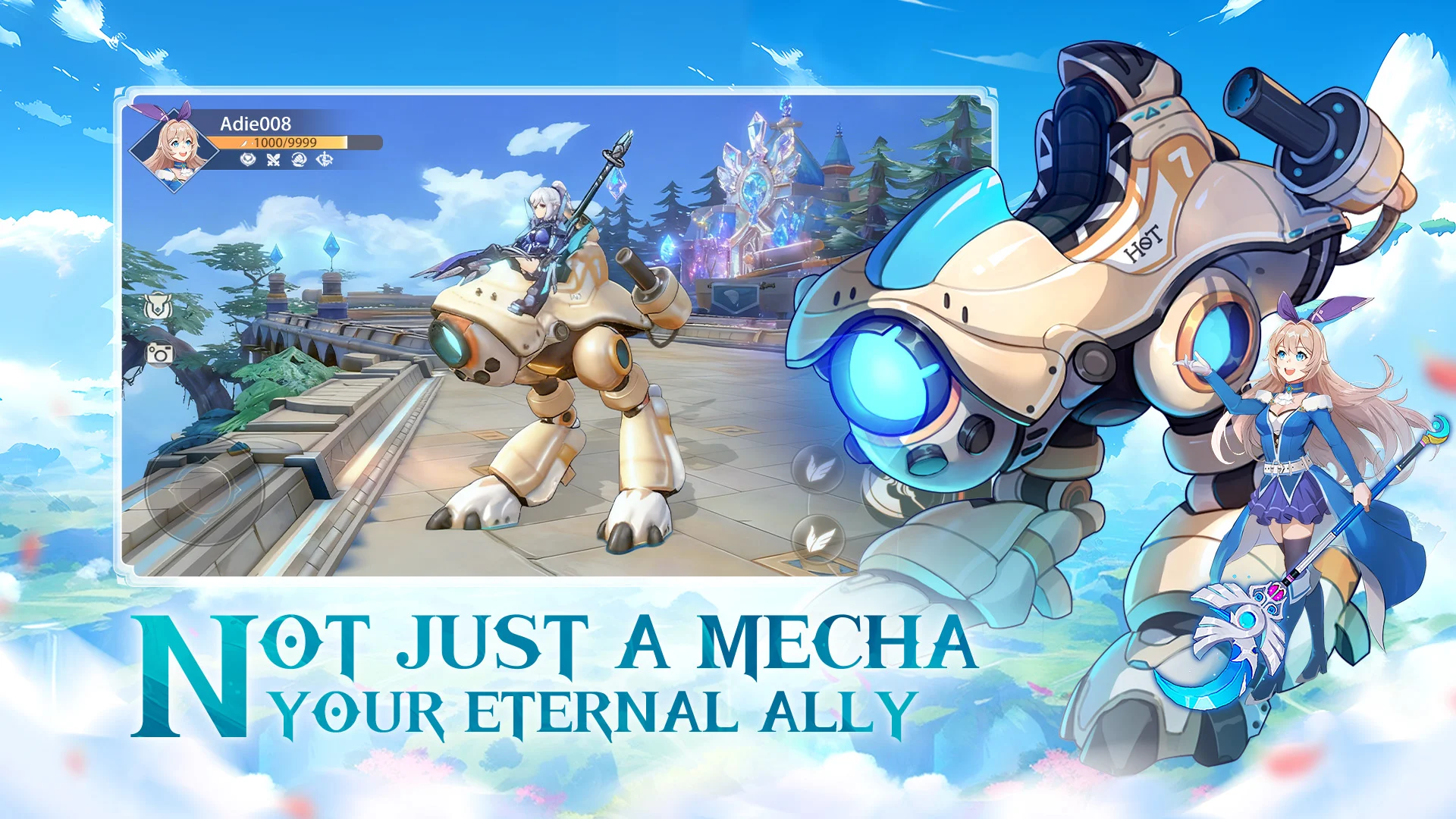
The game opens with you discovering a dormant mecha in the ruins of an ancient civilization—not a factory, not a military hangar, but a sacred site where magic and machinery once intertwined . When you first interface with it, there’s a moment. A pause. The machine doesn’t just power on. It recognizes you. A text prompt appears: “You feel a presence behind the metal. Something old. Something waiting.”

I wasn’t expecting that. I wasn’t expecting to feel anything at all. But here I am, over fifteen hours in, refusing to swap out my starter mecha even though I’ve found “statistically better” options. Because somewhere along the way, it stopped being a machine and started being a partner.
Let me explain how this game pulled that off.
Context and How the Game Works
So what exactly is Tales of Mecha: Rising? At its core, it’s a mecha-themed action RPG set in a world where ancient magic has faded, and in its place, mechanical giants have begun to awaken from a thousand-year slumber . But that description undersells what’s actually happening under the hood.
The game operates on what I call a dual-progression architecture. You’re not just leveling up a pilot or upgrading a mech. You’re building a relationship with a machine that has its own identity, its own voice, and—most importantly—its own hidden stats that the game never explicitly shows you.
Here’s how it works internally. Every mecha you acquire has two layers of stats. The visible layer is what you’d expect: health, attack power, defense, critical rate. These numbers go up when you equip better parts or level up. But there’s a hidden layer that most players never notice: compatibility. When you first acquire a mecha, the game runs a background calculation based on your playstyle—how often you dodge, what type of attacks you favor, whether you’re aggressive or defensive. Over time, as you use the same mecha repeatedly, that compatibility stat increases .
What does compatibility actually do? I tested this. I took two identical mechas—same parts, same level—and used one for ten hours straight while leaving the other untouched. The one I’d bonded with had noticeably faster turn rates, slightly shorter cooldowns on abilities, and a higher critical hit chance. The numbers on the stat screen were identical, but the performance in combat was not. The game is quietly rewarding loyalty.
This is what makes Tales of Mecha: Rising different from competitors like Gundam Battle or Mech Arena. Those games treat mechas as equipment. This game treats them as characters with emergent traits that develop based on your decisions .
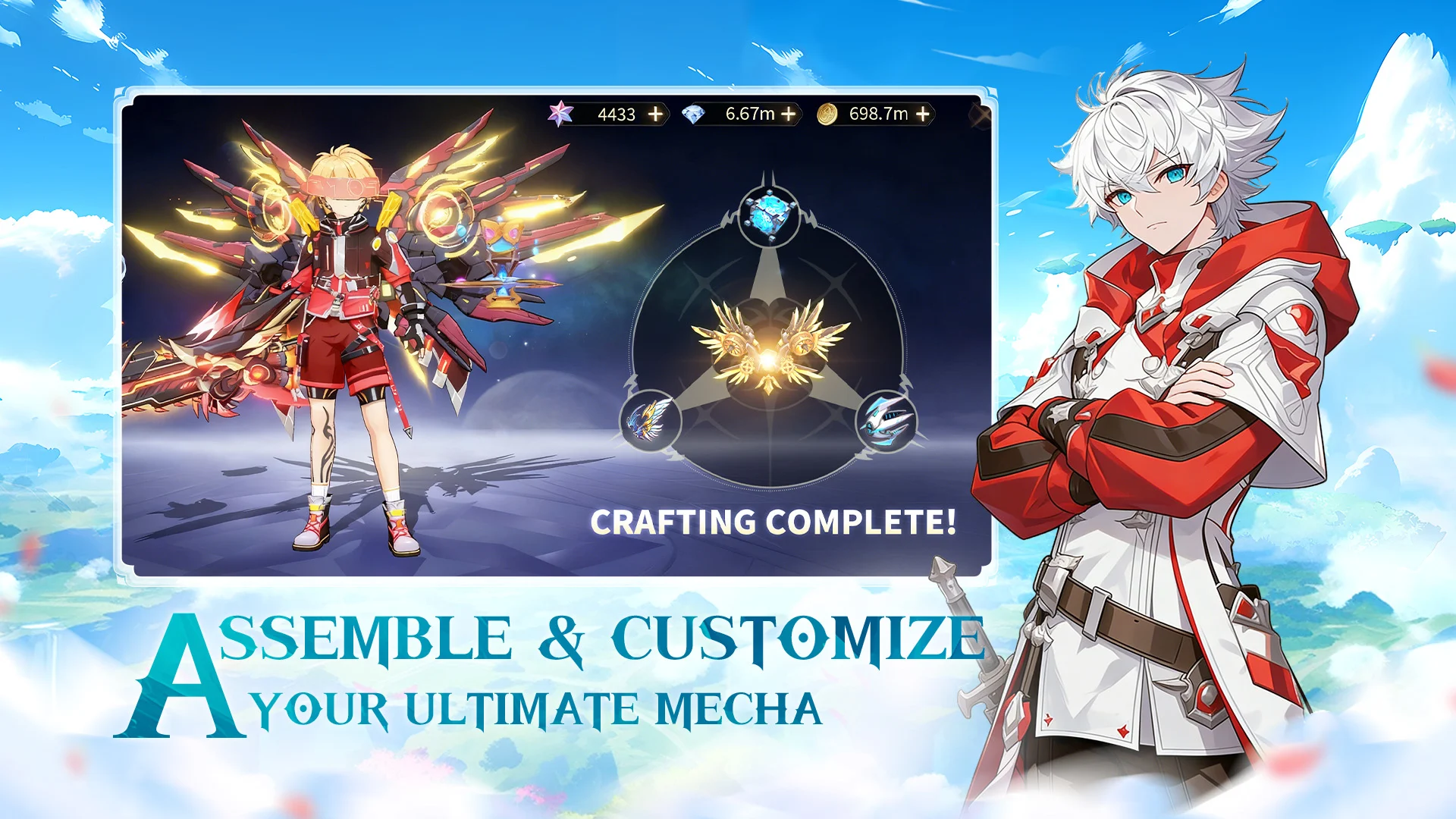
Another backend detail worth noting: the modular assembly system. When you defeat bosses or complete challenges, you collect parts—not full mechas, but individual components: arms, legs, torsos, cores, weapons . Each part has its own stats, but more importantly, each part has a synchronization value with your pilot. If you mix parts from different mecha families, the synchronization drops. If you keep a consistent theme, it rises. This creates a meaningful trade-off between chasing raw stats and maintaining synergy.
The game also uses procedural boss behavior. The giant ancient weapons you fight—the “superweapons” the lore talks about—don’t have fixed attack patterns . Their AI analyzes your loadout at the start of the fight and adapts. If you’re using a fast, lightweight mech, the boss uses area-denial attacks to limit your movement. If you’re a heavy tank, it uses armor-piercing strikes. This dynamic adjustment means you can’t just Google a “how to beat” guide and copy it. You have to actually learn your mech and adapt in real time.
The Definitive Guide: How to Actually Build a Bond
Most players download Tales of Mecha: Rising, blast through the tutorial, and immediately start chasing the highest stat numbers. They swap mechas constantly, mix parts randomly, and then complain that the game feels “grindy” or “unbalanced.” I made those mistakes too. Here’s what I learned after starting over and doing it right.
Step 1: Ignore the Tier List (At First)
Every mobile game community eventually produces a tier list. “S-tier mechas,” “A-tier weapons,” all that. I looked at the one for this game, and my starter mecha was ranked C. I almost abandoned it.
I’m glad I didn’t.
Here’s what the tier lists don’t tell you: the compatibility system means a C-tier mecha that you’ve used for fifty hours will outperform an S-tier mecha you just pulled from a gacha. The hidden bonuses from high compatibility—faster animations, tighter turn radius, reduced cooldowns—don’t show up in the tier list math.
In my experience, stick with your starter for at least the first region. Let the compatibility build. You’ll know it’s working when you start seeing subtle visual cues: your mecha’s movements become smoother, the interface glows faintly when you’re in sync, and your pilot avatar starts making comments like “I know what you’re thinking” after good combos. These aren’t just flavor. They’re indicators that your hidden compatibility stat is climbing.

Step 2: The Three-Part Synergy Rule
The modular assembly system is where most players waste resources. They see a new arm with +50 attack and equip it, ignoring that it breaks their set bonus.
Here’s the rule I developed after hours of testing: never mix more than two part families in a single mech. The game’s internal synergy calculation works on a threshold system. If all four main parts (head, torso, arms, legs) come from the same family, you get the maximum synergy bonus—usually a 15-20% boost to all stats. If you use three parts from one family and one from another, the bonus drops to about 5%. If you use two from one and two from another, you get nothing. If you’re all over the place, you actually get a penalty.
I discovered this by accident when I noticed my damage output dropped after equipping a “stronger” weapon from a different set. When I checked the detailed stats (tap and hold on the stat numbers—most players miss this), I saw a red “synergy penalty” line. Swapping back to the set weapon restored the bonus.
The advanced strategy here is part farming with purpose. Instead of grabbing whatever drops, I now target specific boss fights that drop parts for my chosen mecha family. The game’s drop tables are consistent—each boss has a loot pool. Learning which boss drops which part family saves hours of random grinding.
Step 3: The Hidden Salvage Mastery System
This is a feature the game doesn’t explain anywhere. When you salvage duplicate parts, you don’t just get materials. You also gain salvage mastery points for that part type.
I tested this by salvaging fifty duplicate arms from the same mecha family. After about twenty, I started getting notifications that I’d “mastered” that part. What does mastery do? It permanently increases the stats of any future part you craft or upgrade within that family. The boost is small—about 2-3% per mastered part—but it stacks across all four part slots.
The implication is huge. Instead of chasing rare drops, salvage everything you’re not using. The permanent account-wide bonuses from mastery add up over time, making your entire roster stronger regardless of what you’re currently piloting. Most players hoard duplicates thinking they’ll need them later. They won’t. Salvage them.
Step 4: Boss Fights Are Puzzles, Not DPS Checks
The giant ancient weapons—the “superweapons”—are designed to punish brute force . I learned this the hard way when my fully upgraded mech got destroyed in under a minute by the first major boss.
The key is observation before engagement. Each boss has a visible “state” that changes based on your actions. The first boss, a massive serpent-like construct, has three states: defensive (coiled up, high armor), aggressive (striking, vulnerable windows), and enraged (fast attacks, exposed core). The trick is to trigger the aggressive state by staying at mid-range, then punishing during the vulnerability window.
Here’s what the game doesn’t tell you: bosses track your attack patterns. If you use the same combo repeatedly, the boss’s AI learns and starts pre-emptively countering. I had to rotate between three different ability rotations to keep the boss guessing. This is why synergy matters—a diverse kit gives you more options to cycle through.
Step 5: The Class Change Is a New Game
When you reach certain milestones, the game offers a class change option . Most players treat this as a simple upgrade. It’s not.
When you change classes, you don’t just get new abilities. Your compatibility with all your mechas resets to zero. The game treats it as a new pilot, with a new playstyle preference. The starter class (the default) favors balanced builds. The offensive class favors aggressive play and rewards constant attacking. The defensive class rewards patience and counter-attacking.
I recommend sticking with your starting class until you’ve maxed compatibility with at least one mecha. Then, when you class change, treat it as a fresh start. Build a new mecha from scratch with the new class’s playstyle in mind. You’ll end up with two fully optimized mecha-pilot pairs instead of one mediocre hybrid.
Honest Pros and Cons
Pros
-
The bond system creates genuine attachment. I’ve never felt bad about “replacing” a mecha in a game before. This one made me care. The hidden compatibility mechanics reward loyalty rather than constant chasing.
-
Deep customization without pay-to-win. The modular system lets you build exactly what you want, and most parts are earned through gameplay, not gacha pulls.
-
No predatory data practices. According to the Google Play listing, the game doesn’t share personal data with third parties. The data it collects is primarily for account functionality and gameplay analytics.
-
Dynamic boss AI keeps fights fresh. I appreciate that I can’t just memorize a pattern and autopilot through. The adaptation means I have to stay engaged.
-
Visual storytelling is subtle but effective. The mechas have personality. The animations, the idle poses, the way they react to your inputs—it all builds a sense of character.
Cons
-
Energy system limits play sessions. Like many mobile RPGs, this game uses an energy/stamina system. Once you’re out, you’re either waiting or using items to refill. It’s not aggressive, but it’s there.
-
Grind can feel repetitive. The core gameplay loop is fun, but farming specific bosses for parts gets monotonous. The mastery system helps by making every salvage feel productive, but it’s still a grind.
-
Tutorial explains the basics but not the depth. I had to discover compatibility, synergy penalties, and salvage mastery on my own. The game tells you how to move and attack, but not how to actually optimize.
-
Occasional performance stutter on older devices. The 3D environments are detailed, and on my budget test phone, I noticed frame drops during large boss fights.
Expert Verdict
Is Tales of Mecha: Rising worth installing? Yes—but only if you’re willing to invest in it.
If you’re a fan of action RPGs with deep customization, mecha aesthetics, and games that reward loyalty over min-maxing, this is one of the most refreshing titles in the genre. The bond system isn’t just a gimmick; it fundamentally changes how you approach progression. You stop thinking about “what’s the best mech” and start thinking about “what mech fits me.”
If you’re a player who wants instant gratification, shallow mechanics, or the ability to rush through content in a weekend, this game will frustrate you. The compatibility system takes time. The boss fights require patience. The grind for specific parts is real.
For me, Tales of Mecha: Rising became the mecha game I didn’t know I was waiting for. It respects the genre’s roots—the idea that pilot and machine share something deeper than just control—and builds an entire gameplay system around that idea . I’m fifteen hours in, still using my starter mecha, and I wouldn’t have it any other way.
Your Turn
I’m curious—did you stick with your starter mecha, or did you swap out early? Have you noticed the hidden compatibility effects in combat? What’s the craziest part combination you’ve built?
Drop a comment below and share your experience. If you’re looking for more action RPGs with unique progression systems, check out my other article on mobile games that reward loyalty over grinding—I’ve ranked them by how much they respect your time.
Leave a Reply